
Walk for Arcause 5.0
Ahmedabad Walking Studio | Siddhpur – Gandhinagar
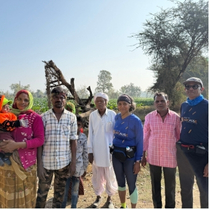
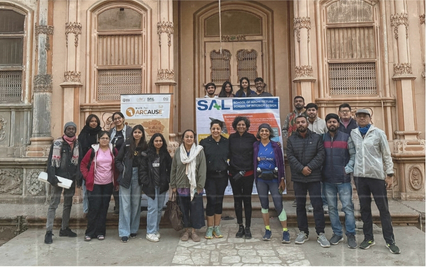
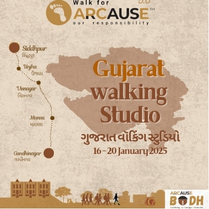
100kms : Sidhpur to Gandhinagar, Gujarat | 20+ Students and Faculty and Architects | 6 Villages
The Ahmedabad Walking Studio was a five-day, 100-kilometre immersive learning journey from Sidhpur to Gandhinagar, Gujarat. Organized by the Ethos Foundation in collaboration with SAL School of Architecture, the initiative brought together a focused team of six students, faculty, and architects to explore the region through the act of walking.
Traversing more than 20 villages, participants engaged closely with the socio-cultural and economic landscape of rural Gujarat. Along the way, they interacted with over 50 artisans, traders, and local experts whose lived experiences offered insights into heritage practices, traditional crafts, and community dynamics. These conversations enabled a deeper understanding of how culture, livelihood, and environment shape daily life.
Designed as an ethnographic exercise, the Walking Studio encouraged observation, documentation, and reflection. It integrated the Ethos Foundation’s learning frameworks—BoDH, SVaDes, and SAaTh—ensuring that the experience remained grounded in empathy, context, and community engagement.
Across five village presentations, students shared their findings and proposed interventions aimed at supporting craft preservation, strengthening local economies, and advancing sustainable development. Their proposals highlighted the potential of design to empower communities while respecting cultural continuity.
WFA 5.0 reaffirmed the value of walking as a method of learning—one that fosters sensitivity, inclusivity, and meaningful connection with people and place.
UK100 | Pauri to Kotdwar
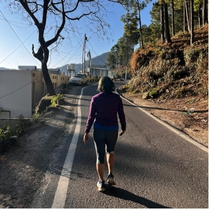
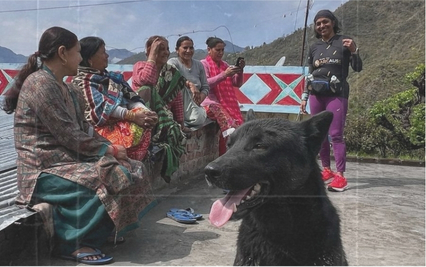
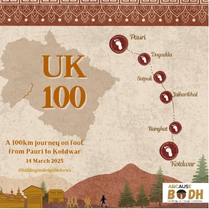
100kms : Pauri to Kotdwar, Uttarakhand | 8 Villages
The Walk for Arcause 5.0 – UK100 was a five-day, 100-kilometre walking campaign from Pauri to Kotdwar, designed to immerse participants in the rich built, natural, and cultural landscapes of Uttarakhand. Organised by the Ethos Foundation, the initiative centred on two key pedagogical frameworks—BoDH (Building on Design Histories) and SVaDes (Sense of Place and Design)—to encourage a grounded understanding of the region and its people.
The journey passed through eight villages, each offering distinct insights into the everyday realities of mountain life. Participants engaged with local communities, artisans, and knowledge-keepers, learning directly from their practices, stories, and lived experiences. These interactions brought to light the deep wisdom embedded in Uttarakhand’s vernacular architecture, its climate-responsive construction methods, and the resourceful ways in which residents adapt to terrain and ecology.
Through continuous on-ground observation and reflective discussions, the walk highlighted how traditional design solutions remain inherently sustainable and resilient. It also shed light on the evolving relationship between people and their environment amidst shifting socio-economic and climatic contexts.
UK100 reinforced the idea that design is not only a profession but a responsibility—one that must honour heritage, empower communities, and guide future interventions with sensitivity and insight.